Berliner Philharmoniker Backstage-Storys
Discover all the background stories, interviews, portraits, essays and backstage stories about the Berliner Philharmoniker.

Who was composer Hans Rott?
“But it sounds like Mahler!” This is a phrase that many listeners have uttered on hearing Hans Rott’s E major Symphony for the first time. This visionary work had to wait 110 years for its first performance. A portrait of the tragically fated composer Hans Rott
Portrait

At the height of their powers
Karajan and the Berliner Philharmoniker in the 1970s
Orchestra History

Portrait of Jordi Savall
The viol player and conductor Jordi Savall is exceptional in every respect. This season, we honor him with a homage. Learn more about Jordi Savall in his portrait.
Portrait

Baroque playfulness
The Berlin Baroque Soloists are one of the best-known chamber formations drawn from the ranks of the Berliner Philharmoniker. They are now celebrating the thirtieth anniversary of their formation. Here we speak to the violinist Raimar Orlovsky, who is the ensemble’s organizer and manager.
Interview

Portrait of Raphaël Pichon
As a young countertenor Raphaël Pichon sang under conductors of the distinction of Jordi Savall, Gustav Leonhardt and Ton Koopman. He was twenty-two when in 2006 he founded his own ensemble, Pygmalion, and quickly came to international attention with his outstanding performances. He is making his debut with the Berliner Philharmoniker this December.
Portrait

“A big chest and a big mouth”
For centuries tenors have been at the centre of the musical world and were all fêted as if they were pop stars. But far more is involved here than mere vocal acrobatics. We examine the myth of the tenor.
- History
- Knowledge

Portrait of Petr Popelka
Petr Popelka’s rise to the top of his profession as a conductor has been nothing if not meteoric. Until only a few years ago he was the principal double bass player with the Dresden Staatskapelle but is now the principal conductor with both the Vienna Symphony Orchestra and the Prague Radio Symphony Orchestra. In January the Czech conductor makes his debut with the Berliner Philharmoniker. Here is a portrait of him.
Portrait

Four Destinies
In memory of the Jewish members of the Berliner Philharmoniker Szymon Goldberg, Gilbert Back, Nicolai Graudan and Joseph Schuster
Orchestra History

Walter Küssner: If I weren’t a musician …
Viola player Walter Küssner likes putting old piles of papers in order.
If I were not a musician ...

Gustav Holst’s “Planets”: A brief profile
In his best-known work, “The Planets”, Holst set the alleged astrological characteristics of seven celestial bodies in our solar system to music. The result is a planetary character study that also captures human traits in sound.
Knowledge

In matters large and small
Chamber music means dialogue on equal footing and the development of a shared artistic identity. No wonder the members of the Berliner Philharmoniker are so passionate about this art form — also at the Salzburg Easter Festival. Here’s why you won’t want to miss it…
Orchestra History

Upbeat: Igor Stravinsky’s “Petrushka“
Sounds of the accordion and barrel organ, dances from Vienna and Paris – in his ballet Petrushka, Igor Stravinsky brings together a dazzling mix of musical worlds. This introduction features rehearsal excerpts, showing how the Berliner Philharmoniker and Kirill Petrenko work together to bring out the nuances of this multifaceted work. Cellist Stephan Koncz guides the programme, offering fascinating insights into the score and its history.
Video

Lully versus Rameau
Jean-Philippe Rameau staged his first opera in 1733 and immediately unleashed a culture war. Was the future of opera to remain in the hands of Jean-Baptiste Lully, who had dominated the French musical scene for more than sixty years? Or was a new day dawning with Rameau’s bold harmonies and the greater refinement of his orchestral writing?

Brahms’s long road to the symphony
“I shall never write a symphony,” Brahms once declared. Discover why he did – even if it took him 15 years.
History

Allan Nilles: If I weren’t a musician …
Violist Allan Nilles has created an alter ego.
If I were not a musician ...

“Every day with this orchestra is special”
Kirill Petrenko talks about his work with the Berliner Philharmoniker

Love at second sight: Gustav Mahler and the Berliner Philharmoniker
Mahler’s music now features so regularly in the programmes of the Berliner Philharmoniker that it is all too easy to forget that this has not always been the case.
History

What you (might) not know about Pyotr Ilych Tchaikovsky
Pyotr Ilych Tchaikovsky’s unmistakable musical voice helped shape the sound of Romanticism. But who was the man behind the glittering façade of his works? A look at some (perhaps) lesser-known sides of the artist.
- History
- Knowledge

Revolutionary, visionary, universalist
On the 100th birthday of Pierre Boulez

“Perfection can be a trap”
The violinist Janine Jansen is the Berliner Philharmoniker’s Artist in Residence for the 2025/26 season. In this interview, she talks about feeling free on stage, performing at family celebrations, and changing priorities in her life.
Interview

The case of Francesca da Rimini
Francesca di Rimini is a pivotal figure in art history; slain by her husband for an adulterous relationship with his brother, she inspired first Dante, then countless other artists to portray her in many different forms. Learn more about her here.

The sound of an outcry
Puccini’s “Madama Butterfly” is not just the story of an abandoned woman; it is also about the clash between different cultures and imperialist exploitation.

What does nature sound like in music?
Whether raging storms, shimmering waves, or gentle raindrops – for centuries, composers have drawn inspiration from nature. But how can the sounds of nature be brought to life in an orchestra?
Video

“I walked in the forest and come back with a song”
On the occasion of the premiere of her new piece “Day Night Day” Outi Tarkiainen talks about why she became a composer and how nature informs her music.
Interview

»Becoming an artist is one of humanity’s greatest challenges«
For nearly 30 years, violist Matthew Hunter has been a member of the Berliner Philharmoniker. During what is likely to be his final tour as an official member, we spoke with him about his rather unusual career, his plans for the upcoming retirement, and a bit of philosophy.

Consistent at every phase of his life
Gustav Holst was a modest man who accepted success rather than striving for it. Yet he refused to compromise when it came to implementing his artistic ideals.
Portrait

A scherzo with a fatal conclusion
Richard Strauss’ opera Salome bears a reputation for scandal (even today). No wonder, as it was censored at times and the soprano at the premiere initially refused to take part.

Not of this world
Fate dealt Lili Boulanger a cruel hand. The first woman to win the coveted Prix de Rome, she was only nineteen when she effortlessly outclassed every male entrant in the 1913 competition; but within a mere five years, she was dead.
- History
- Portrait

How composers celebrated Christmas
Have you ever wondered how composers might have spent Christmas? We looked into this question, and discovered a wealth of anecdotes.
History

Variants and versions of Bruckner’s symphonies
Anton Bruckner did not make it easy for his contemporaries – nor for future generations. He worked on his symphonies again and again, revising and shortening them. Performers are spoilt for choice.

Wenzel Fuchs: If I were not a musician …
Why Wenzel Fuchs swapped his ski poles for the clarinet.
If I were not a musician ...

Between the Wall and the Philharmonie
Renate Werwigk has been a fan of the Berliner Philharmoniker since her early years. To mark the 35th anniversary of the fall of the Berlin Wall, the Berliner shares her memories of the famous “Fall of the Wall Concert” in 1989.
- History
- Video
- Interview

Portrait of Martha Argerich
Pianist Martha Argerich has been an artistic companion of the Berliner Philharmoniker for many years – like Daniel Barenboim, her childhood friend.
Portrait

Composing and networking
In the eighteenth century, Freemasonry combined mysterious rituals with Enlightenment ideals. Mozart was a member of this secretive society.
History

Portrait of Ferruccio Busoni
The pianist, teacher and composer Ferruccio Busoni is an altogether unique phenomenon in the history of music – and yet he leads only the most shadowy of existences in concert life today. The reasons for this are many and varied.
Portrait

The age of symbolism
This artistic movement offered the harsh, brutal reality of the late 19th century a fascinating alternative world. It was full of poetic beauty, mystical allusions and sensory dreams.
History

Princess or wallflower?
In the 1920s, Germaine Tailleferre stirred up the musical life of France as a member of the composers’ collective “Les Six”, yet she still fell into neglect. Here is a portrait of her turbulent life.
- History
- Portrait

The Misfit
Anton Bruckner was always an outsider in Vienna’s polite society. Who was this “mifit” and what motivated him? In search of the evidence.
Portrait

I’d like to take people with me on a journey
Composer and conductor Peter Eötvös died in March of this year at the age of eighty. When the Berliner Philharmoniker give the German premiere of his piano concerto “Cziffra Psodia” this September, the orchestra pays homage to a passionate musician who was a close associate for decades.
Portrait

Raphael Haeger: If I were not a musician...
In this section, we introduce Berlin Philharmonic musicians and their extra-musical passions. Today: percussionist Raphael Haeger, who was already aiming high as a child.
If I were not a musician ...

Reposing by a Lake, Riding a Camel in the Desert
Where and How Composers Went on Holiday? The simple answer: not at all. Because when they went travelling, they always took the score or at least a sketchbook with them. There was plenty of inspiration.

The intimate strangers
Bruckner and Mahler were titans. Both men were symphonists whose works were unprecedented in their length. They had neither predecessors nor successors. They were close and simultaneously distant. A closer look at the lives of these two disparate symphonists.
History

Fanning the flames
Today, concerts featuring Bruckner’s symphonies are among the Berliner Philharmoniker’s seasonal highlights, but this was not always the case. On the Bruckner tradition of the Berliner Philharmoniker.
Orchestra History

Kotowa Machida: If I were not a musician ...
For violinist Kotowa Machida cooking is pure relaxation.
If I were not a musician ...

Maurice Ravel’s “Boléro”: 7 facts about the world-famous work
A masterpiece, “unfortunately without music” was Ravel’s own judgement of his work. Discover 7 entertaining facts about the piece.
Knowledge

A short piano lexicon
Prélude, nocturne, sonata and étude – in our short piano lexicon, we introduce you to the major genres of piano music one at a time.
Knowledge

The woman of the century
Although she is often remembered chiefly as the wife of the composer Robert Schumann, in her own day, Clara Schumann led a high-profile life as a pianist, composer and teacher.
- History
- Portrait

Johannes Brahms and Joseph Joachim
Without the violinist Joseph Joachim, Brahms would probably never have written his Violin Concerto. The work is the result and the expression of a long-standing friendship.
History

Nikolaus Römisch: If I were not a musician...
We present Berliner Philharmoniker and their extra-musical activities. Today: cellist Nikolaus Römisch, who kicks the ball into the back of the net.
If I were not a musician ...

Franz Schubert: Music like an Infinity Symbol
His music can suspend all sense of time, as if, while exploring the streets of a large city, you gradually lose yourself in the moment.

The sound of crime and retribution
It always be considered Richard Strauss’ most modern work. He set the most intense and most complex emotions to music - revenge, guilt, madness, painful memories and the struggle for what is just.

Bertold Stecher: If I were not a musician …
Trumpeter Bertold Stecher likes to create symphonies of colours.
If I were not a musician ...

Ludwig van Beethoven the pianist
Ludwig van Beethoven was a piano prodigy; he enjoyed the greatest successes of his early career as a pianist. However, as his hearing deteriorated, this changed.

Gustav and Alma Mahler
Should she really accept his offer of marriage? At twenty-two, Alma was an extraordinarily beautiful and charismatic woman. Mahler was a social climber from the provinces.
History

Jonathan Kelly: If I were not a musician ...
In this section, we introduce members of the Berliner Philharmoniker and their extramusical passions. Today: Jonathan Kelly has a green thumb.
If I were not a musician ...

Pyotr Ilyich Tchaikovsky and the Berliner Philharmoniker
Twice during his European tours, Pyotr Tchaikovsky conducted the Berliner Philharmoniker – in February 1888 and again in 1889. The collaboration between the composer and the orchestra had a longer and somewhat delicate prelude ...
- History
- Orchestra History

Arnold Schoenberg in exile
In the 1940s, composers, writers, visual artists and other intellectuals who had fled the Nazis gathered in Los Angeles.
History

Martin von der Nahmer: If I were not a musician ...
In this series, we introduce members of the Berliner Philharmoniker and their extramusical passions. Today: Violist Martin von der Nahmer cooks up a storm.
If I were not a musician ...

Brightening up sleepless nights
The mysteries of the “Goldberg Variations”

Verdi’s Messa da Requiem
Fear of death and the end of the world in Italian. Verdi's Messa da Requiem is a showdown between art and the church.
Knowledge

Schoenberg’s Slap-in-the-Face Concert
A memorable Schoenberg performance in 1913
History

Between morbidity and life force
The fin de siècle

The storm in music
Especially with thunder and lightning, composers can impressively let their creativity and feeling for striking sound effects run free.
History

Matthew McDonald: If I were not a musician ...
Double bass player Matthew McDonald loves poetry – and not only in music.
If I were not a musician ...
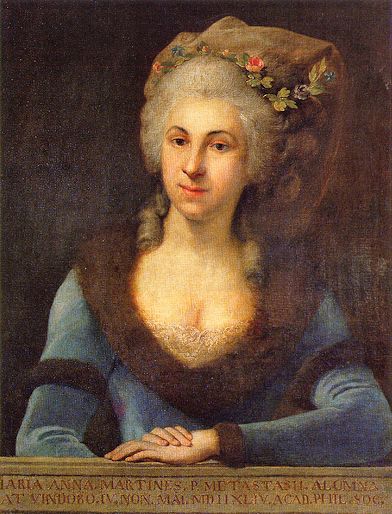
The composer Marianna Martines
Composing child prodigy, harpsichord virtuoso and singer: in 17th century Vienna, her domestic academies were musical hotspots.
- History
- Portrait

Martin Heinze: If I were not a musician ...
Double bass player Martin Heinze likes to rise above things.
If I were not a musician ...

In celebration of Hans Scharoun
A declaration of love to his most famous building: the Philharmonie Berlin.
- History
- Orchestra History

Mysterious symphonies
Mozart’s Symphonies Nos. 39 to 41 are regarded as the pinnacle of his instrumental oeuvre - and are at the same time shrouded in mystery.
Knowledge

Who was Beethoven’s “Immortal Beloved”?
Beethoven dedicated the first print of his Seventh Symphony to Antonie Brentano. Was she perhaps his “Immortal Beloved”? To this day, the mystery has not been completely resolved.
History

Yearningly successful
His two-and-a-half-year stay in America was an ambivalent time for Antonín Dvořák – characterized by triumphs, enthusiasm about new impressions, but also yearning for his Bohemian homeland.
- History
- Portrait

Vincent Vogel: If I were not a musician …
Percussionist Vincent Vogel loves catching the waves.
If I were not a musician ...

“My music saves me”
Shortly before his death in July 2024, we spoke to Wolfgang Rihm on the occasion of his planned residency with the Berliner Philharmoniker: about inspiration, about the struggle to complete a work and about beauty in modern music.
Interview

Profoundly human music
Wolfgang Rihm and the Berliner Philharmoniker were closely linked for almost five decades. An obituary.

Peasant girl with charisma
She was the game changer in the Hundred Years' War. Find out more about the historical Joan of Arc, who inspired many artists.

How Friedrich became Bedřich
Bedřich Smetana is regarded as the founder of Czech national music. His mother tongue was German, and he had to work hard to learn Czech.
- History
- Portrait

A lifelong journey
In this interview, you can find out how microphones make Seong-Jin Cho, our artist in residence, nervous, that a pianist’s work is never done, and why the sound of the piano cannot be replaced by artificial intelligence.
Interview

The “Don Juan” conflict
Richard Strauss owed practically everything to Hans von Bülow. Their mutual admiration seemed boundless, until a performance of Don Juan in Berlin.
Philharmonic Moments

Wagner’s female characters
Siegfried, Wotan and Tannhäuser: it is the male heroes who seem to leave their mark on Wagner’s music dramas. But closer inspection reveals that it is the female characters who guide events, through their resolute actions and farsightedness

Loriot and the Berliner Philharmoniker
Celebrating the 100th anniversary of the great German humourist: a look back at the collaboration between Vicco von Bülow and the Berliner Philharmoniker.
Orchestra History

March of an asthmatic
The genesis of Alban Berg’s Three Pieces for Orchestra
- History
- Philharmonic Moments
- Orchestra History
- Knowledge
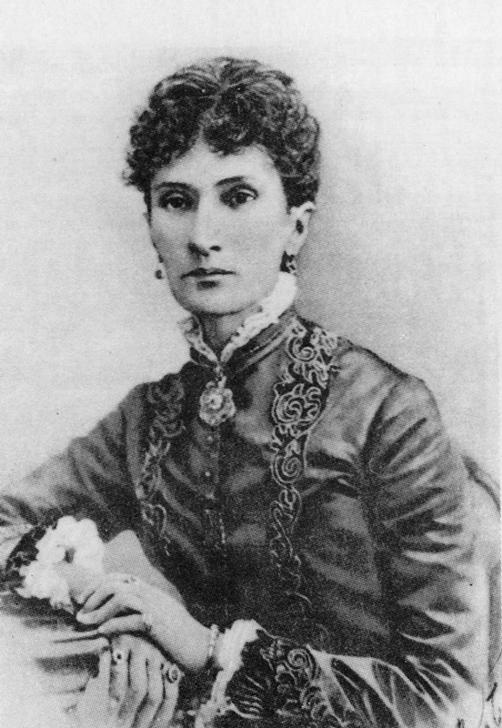
The remarkable friendship of Pyotr Ilyich Tchaikovsky and Nadezhda von Meck
The remarkable friendship of Pyotr Ilyich Tchaikovsky and Nadezhda von Meck
History

“Little firefly, glaringly illuminated and frightened by unbearable beauty”
The new piece by Milica Djordjević

Richard Strauss – a hero?
In »Ein Heldenleben« – A Hero’s Life – Strauss portrayed no one but himself. What was so heroic about him, however, the composer did not reveal.

Interview with Jörg Widmann
After the Berliner Philharmoniker often performed his works, Jörg Widmann is now Composer in Residence for the 2023/24 season.
Interview

From an experiment to a success story
40 years of the Scharoun Ensemble

Richard Strauss’s “Metamorphosen”: An introduction
The title derives from the ancient Greek and implies music that transmutes and transmogrifies incessantly.

Newly discovered
Henri Dutilleux's First Symphony is a masterpiece.

Antoine Tamestit
Violist Antoine Tamestit has been acclaimed for his warm, richly-coloured tone.
Portrait

The Springtime of Love
For Robert Schumann, the early years of his marriage to Clara Wieck were a time of happiness and exuberant creativity. Some of his finest works date from this period.
History

Christoph Hartmann: If I were not a musician ...
In this section, we introduce members of the Berliner Philharmoniker and their extramusical passions. Today: Christoph Hartmann, who designs bicycles.
If I were not a musician ...

15 Years of the Digital Concert Hall
The Digital Concert Hall celebrates its 15th birthday in the 2023/24 season.
Orchestra History

Klaus Mäkelä, the Man Who Knows No Fear
In April, the Finn Klaus Mäkelä makes his debut with the Berliner Philharmoniker with works by Tchaikovsky and Shostakovich.
Portrait

Master of the hidden message
Dmitri Schostakowitsch and the Berliner Philharmoniker: on the orchestra’s long-standing Shostakovich reception.
- History
- Orchestra History

Triumph in Moscow: Shostakovich’s 10th Symphon
The Moscow concert conducted by Herbert von Karajan with Shostakovich in the audience is legendary.

“It’s never enough, it can never be too much”
The conductor and harpsichordist Emmanuelle Haïm is one of the leading protagonists of early music. Portrait of a baroque icon.
Portrait

The calligraphy of sounds
A portrait of the composer Toshio Hosokawa
Portrait

“Unbelievable! Utterly irresponsible!”
Schoenberg’s Variations for Orchestra are among the most demanding works ever composed for a large symphony orchestra. The premiere, however, turned into a fiasco.
Philharmonic Moments

Who was Elijah?
On the protagonist and narrative of Mendelssohn’s oratorio
Knowledge

Pyotr Ilyich Tchaikovsky and Ballet
Tchaikovsky is rightly considered the maestro of ballet music. He defended it against contemporaries who classified it as mere incidental music. A love story.
History

Erich Wolfgang Korngold
In the 1920s, Korngold was one of the most frequently performed opera composers of the time. The Nazi regime forced him to emigrate to the USA, where he embarked on a second career.
- History
- Orchestra History

5 questions about “Also sprach Zarathustra”
Read five things you didn't know about this famous tone poem by Richard Strauss.

The French composer Paul Dukas
Despite his relatively slender output, Paul Dukas was an influential figure on the French music scene at the beginning of the 20th century.
- History
- Portrait

The man who could do everything
A portrait of Ralph Vaughan Williams
Portrait

Dallapiccola's Il prigioniero
Introduction to the expressive short opera “The Prisoner”.
Knowledge

Bizarre, ingenious, forgotten
Portrait of Rued Langgaard
- Philharmonic Moments
- Portrait

From Breakdancing to the Baroque
Portrait of the countertenor Jakub Józef Orliński
Portrait

Fifty years of the Karajan Academy
A success story: the Karajan Academy has been training young orchestral talent since 1972.
- History
- Orchestra History

The curse and mercy of exile
Roberto Gerhard rediscovered
Portrait
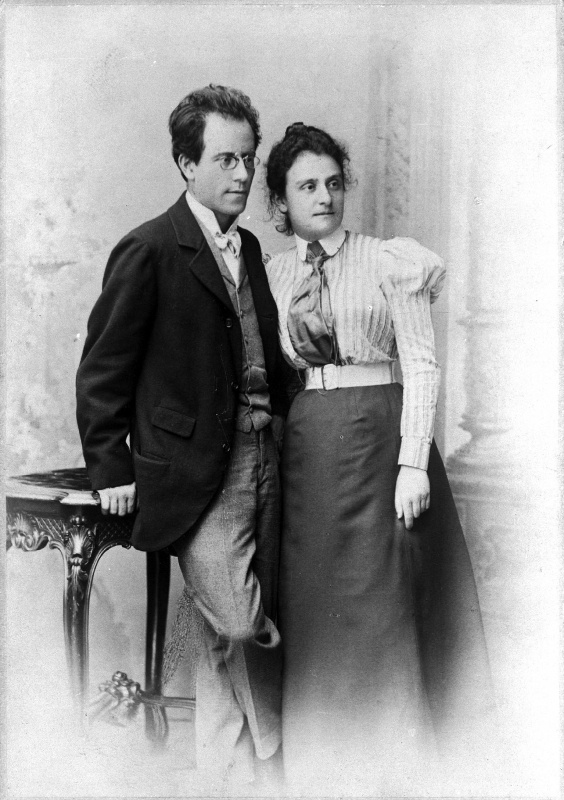
People around Mahler
His friendships and contacts tell us a lot about Gustav Mahler and his world.
- History
- Portrait

If I were not a musician ...
Cellist Bruno Delepelaire could have imagined a professional life among swifts and cranes as an alternative to his musical career.
If I were not a musician ...
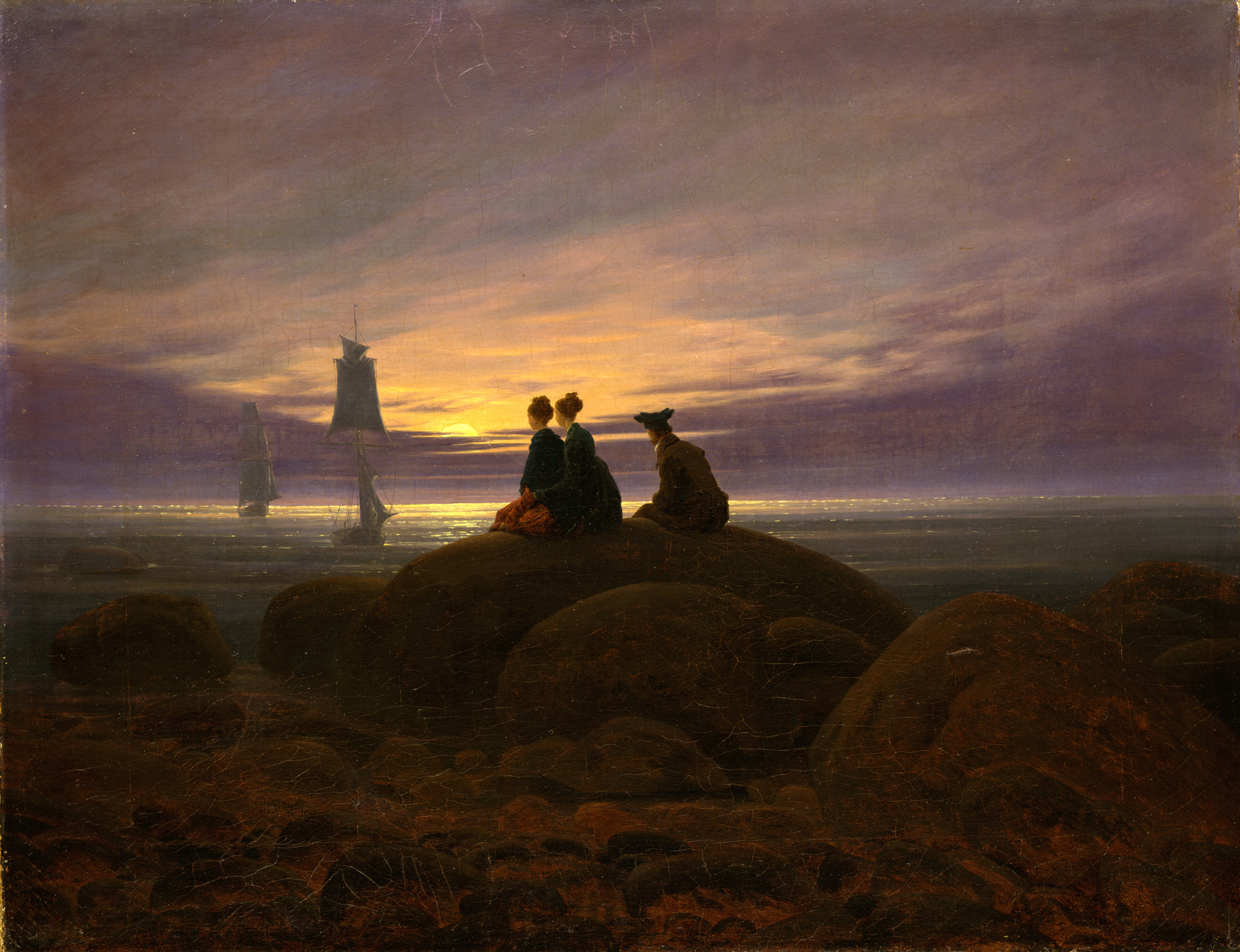
The realm of the inexpressible
Music of the Romantic period: A journey to the depths of the soul

Peter Tschaikowsky’s Opera “The Queen of Spades”
The ninth of Tchaikovsky’s ten operas finds the Russian composer at the very pinnacle of his art. The Queen of Spades is a tale of love, jealousy and money in which gambling at cards becomes an obsession.
Knowledge

Between heaven and earth
Johannes Brahms and the Berliner Philharmoniker share a special history. We take a deeper look at his “Song of Destiny”.

Witold Lutosławski’s First Symphony
The Polish composer Witold Lutosławski was one of the most fascinating musicians of his day. An enthralling rediscovery.

The historical Ivan Mazeppa
The figure of Ivan Mazeppa has inspired a wide variety of artists, including Franz Liszt, Lord Byron, Rainer Maria Rilke, Bertolt Brecht – and of course Alexander Pushkin, whose poem Poltava forms the basis of Tchaikovsky’s opera.
History

Hande Küden: If I were not a musician ...
Violinist Hande Küden could have pursued a career as a professional athlete.
If I were not a musician ...

Paula Ernesaks: If I weren’t a musician …
Horn player Paula Ernesaks is a true team player.
If I were not a musician ...

Felix Mendelssohn as traveller
Mendelssohn went on a three-year educational trip in his early twenties and brought back a great deal of inspiration for his later works.
History
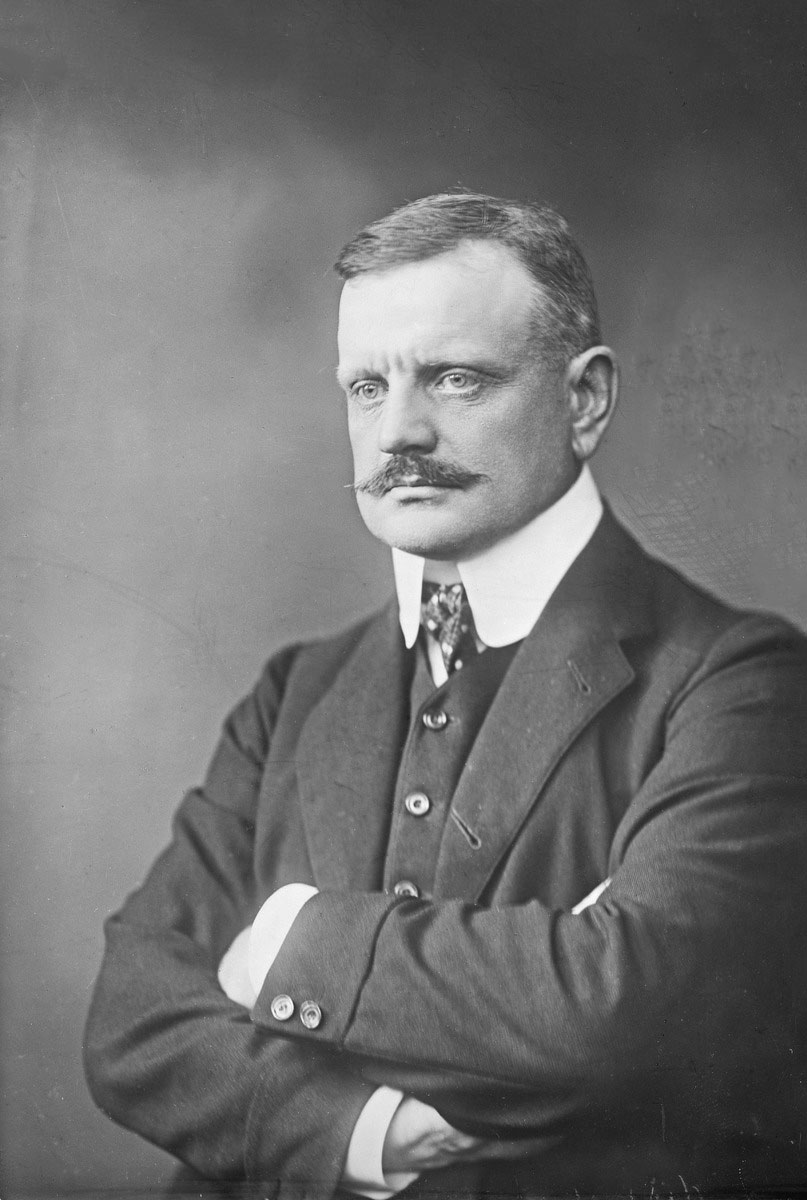
A Finn in Berlin
Jean Sibelius is considered Finland’s great composer, but hardly anyone associates him with Berlin – but the German metropolis played an important role in his artistic career.
- History
- Portrait

Karl Amadeus Hartmann
Concerto funebre

Peter Tchaikovsky’s last opera “Iolanta”
Peter Tchaikovsky’s last opera, Iolanta, is tender, magical and poignant.

Jacob’s Ladder
An introduction

A great friendship
Zubin Mehta and the Berliner Philharmoniker
- History
- Orchestra History

A magician with greyish-green eyes
Composer Karol Szymanowski in portrait
Portrait

Beware of acoustic incense
Herbert Blomstedt in conversation about Anton Bruckner
Who was...
Franz Schreker?
Portrait

Jesper Busk Sørensen: If I were not a musician ...
Trombonist Jesper Busk Sørensen has a good eye for detail. Read what his second passion is besides music.
If I were not a musician ...

Piano as home
The pianist Kirill Gerstein
Portrait

Kurt Weill and Lotte Lenya
One of the most fascinating couples in cultural history
History

Fleeing, pursuing, coming together
The fascinating world of the fugue

A very special friendship
Daniel Barenboim conducting the Berliner Philharmoniker
- History
- Orchestra History

A bundle of energy
Gustavo Dudamel – a longstanding friend of the Berliner Philharmoniker
- History
- Portrait

A one-time event – Leonard Bernstein with the Berliner Philharmoniker
On the 100th anniversary of the birth of the exceptional artist
- History
- Orchestra History

Zealand in the snow
A portrait of the Danish composer Hans Abrahamsen
Portrait

The Myth of the Chief Conductor
The Increase and Shift in Importance of the Conductor and Chief Conductor
Orchestra History

Symphonic lighthouse
Beethoven’s Ninth and the Berliner Philharmoniker: a retrospective
Orchestra History

The Piano as Orchestra
Portrait: Pianist Daniil Trifonov
Portrait

Leone Sinigaglia had two great passions: mountains and music. In a way, he was a pioneer in both fields.
- History
- Portrait

“Long life! Booze, ecstasy!”
Erwin Schulhoff – a composer who pushed musical boundaries
- History
- Portrait

Who was ... Ernst Toch?
The “most thoroughly forgotten composer of the 20th century”. A Portrait of Ernst Toch.
- History
- Portrait

Who was Karl Amadeus Hartmann?
He could also have been a painter, but he chose music: Karl Amadeus Hartmann, the son of a Munich painter, began composing after seeing Weber’s opera Der Freischütz.
- History
- Portrait
Who was Egon Wellesz?
Egon Wellesz was a three-fold talent: composer, musicologist and Byzantinist.
- History
- Portrait

Anna Mehlin: If I were not a musician ...
In this section, we present Berliner Philharmoniker musicians and their extra-musical passions. Today: violinist Anna Mehlin, for whom perfection and dedication are important not only in music.
If I were not a musician ...